-
What is Thermocouple
A
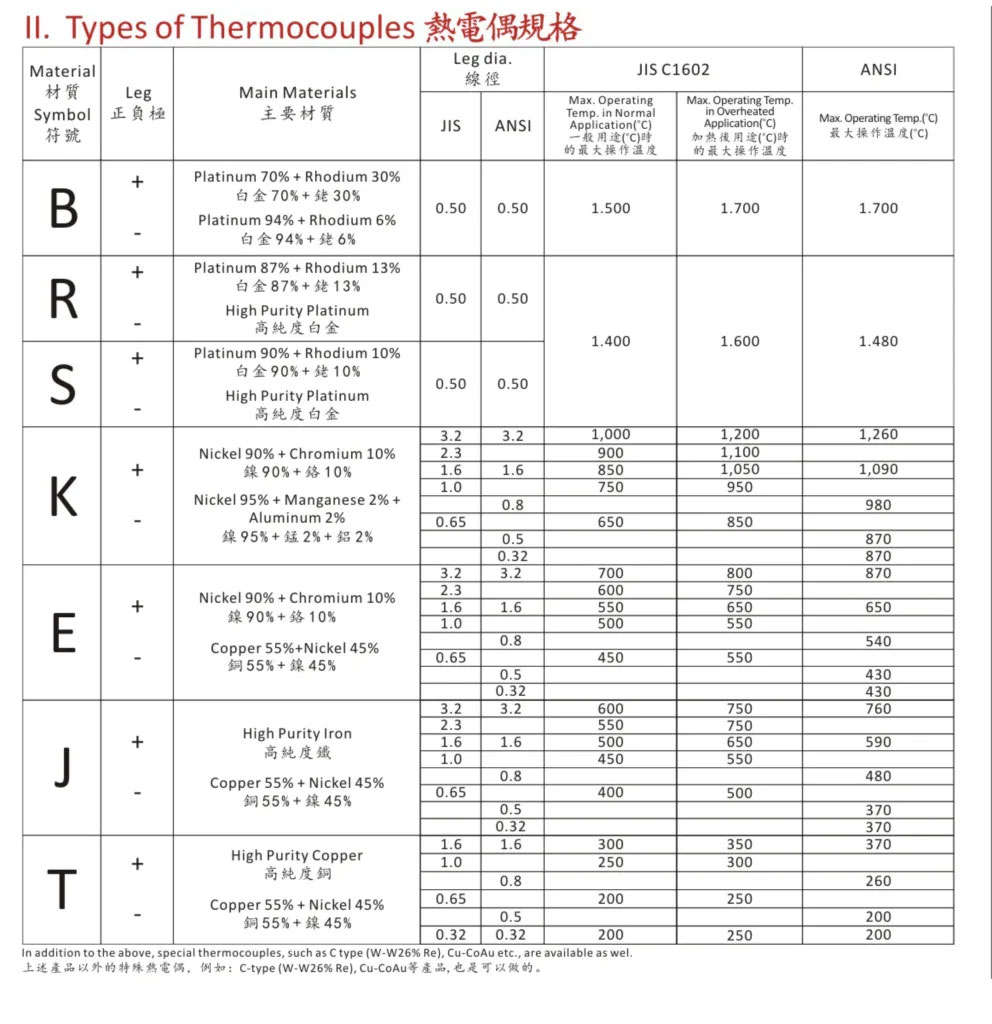
thermocouple is a type of temperature sensor. It is made from two wires composed of different metals, joined together at one end to form a junction. This junction is the point at which temperature is measured. When the temperature at this junction changes, a corresponding voltage is generated.There are many types of thermocouples, each offering unique characteristics in terms of temperature range, durability, vibration resistance, chemical resistance, and application compatibility. Types K, E, J, and T belong to the “base metal” thermocouples and are the most commonly used. Types R, S, and B are classified as “noble metal” thermocouples and are typically used for high-temperature applications (refer to the thermocouple temperature range chart for more details).
Thermocouples are widely used in industrial processes, scientific research, and by original equipment manufacturers (OEMs). They appear in nearly every industry, including power generation, oil and gas, pharmaceuticals, biotechnology, cement, and paper manufacturing. Many household appliances—such as stoves, heaters, and toasters—also rely on thermocouples.
Thermocouples are commonly chosen because they offer low cost, high-temperature capability, a wide measurement range, and robust, durable construction.
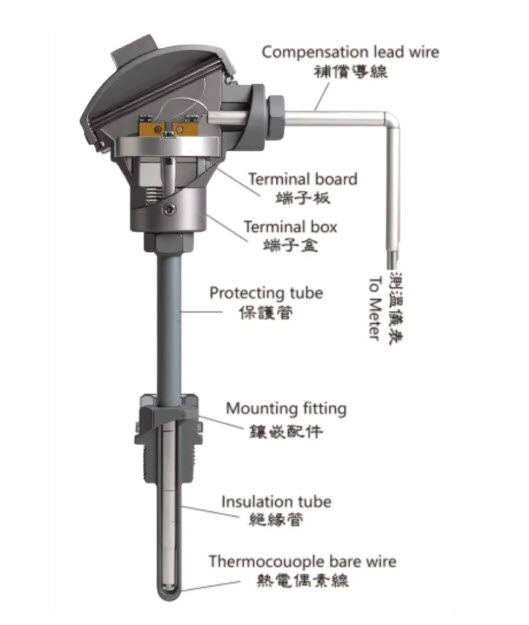
Types and Specifications of Thermocouples
-
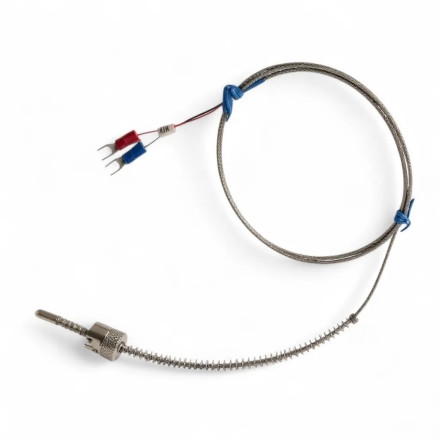
Compression-Type
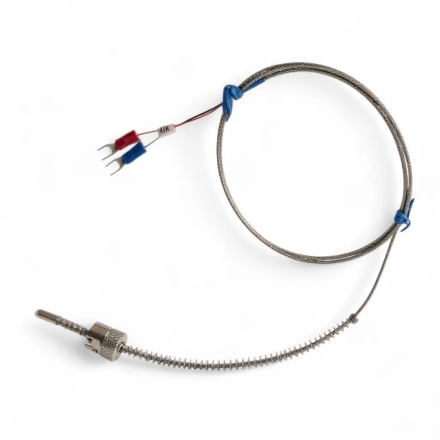
SHEATH
A metal sheath is applied to the outside of the thermocouple, and the interior is tightly filled with inorganic mineral insulation (high-purity magnesium oxide powder). It is then annealed and drawn to its final form. This construction enhances dielectric strength, oxidation resistance, and provides flexibility, while greatly improving response time.
This type is known as a small-diameter thermocouple, also referred to as a mineral-insulated (MI) thermocouple or sheath-type thermocouple.
RTD
RTD. This sensor operates on the principle that electrical resistance changes with temperature. By measuring this resistance, the corresponding temperature can be determined.
In the past, materials such as platinum, nickel, and copper were used as the resistive element; however, platinum offers superior stability and repeatability compared to other metals. As a result, platinum resistance elements have become widely adopted.
Among RTDs, the
Need other sizes or customized specifications?
Whether you need special dimensions, specific application requirements, or custom designs, feel free to contact us for more information.