-
What is Thermocouple Compensating Cable
Thermocouple Compensating Cables are specially designed conductors used to extend thermocouple signals to temperature measurement instruments. They are made from alloy materials that correspond to the specific thermocouple type, ensuring accurate signal transmission at the junction and preventing measurement errors caused by mismatched wire materials.The working principle of a thermocouple is based on the thermoelectric voltage generated by the junction of two different metals. If ordinary copper wires are used for extension, additional voltages will be produced due to the difference in metal composition, resulting in inaccurate temperature readings. Compensating cables are composed of alloys matched to the thermocouple type (such as K, J, T, R, S, etc.), effectively compensating for errors caused by extended wiring and ensuring accurate temperature measurement.
Application Features of Thermocouple Compensating Cables
- Precise Signal Transmission: Maintains stable thermoelectric voltage and improves temperature measurement accuracy.
- Multiple Insulation Options: Choose from various insulation materials based on the application environment—high temperature, oil resistance, waterproofing, or chemical resistance.
- Enhanced System Stability: Extends the thermocouple connection to the control system while reducing signal interference risks.
- Cost-Effective: Lower cost than using full-length thermocouples, ideal for long-distance wiring.
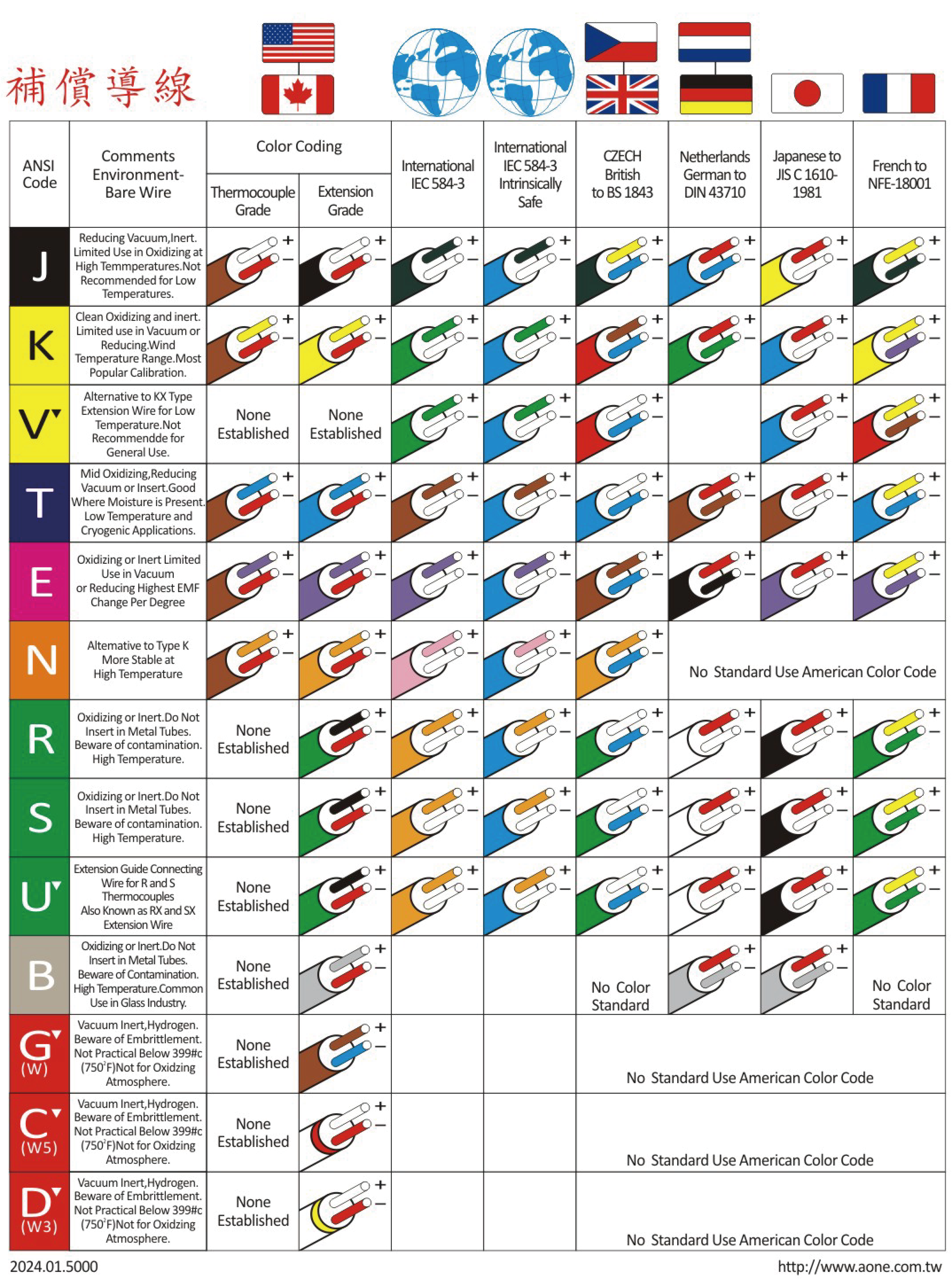
Compensating Cable Color Codes
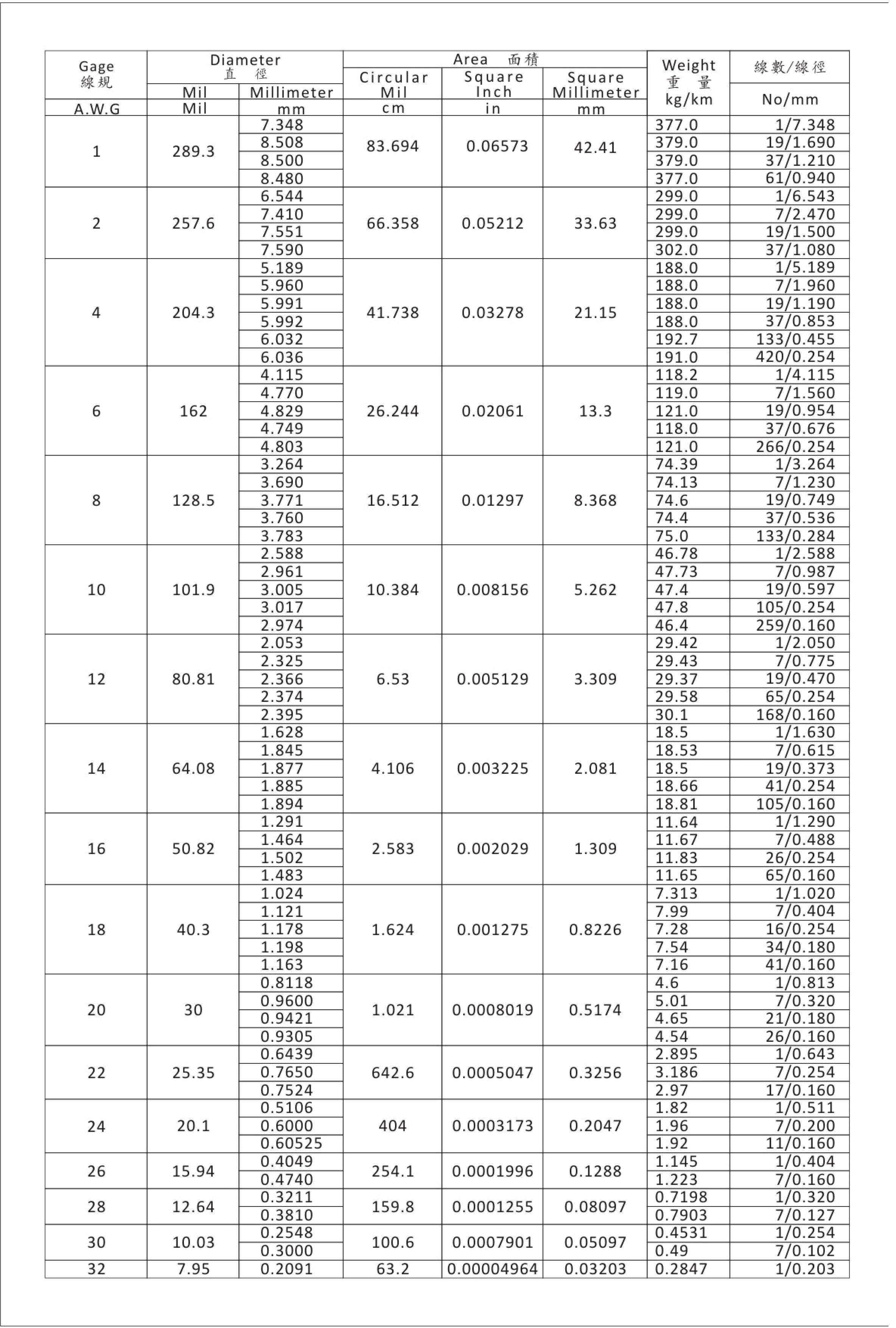
Wire Gauge Size Comparison Table